45 Product Manager Interview Questions to Screen PM Candidates in 2026
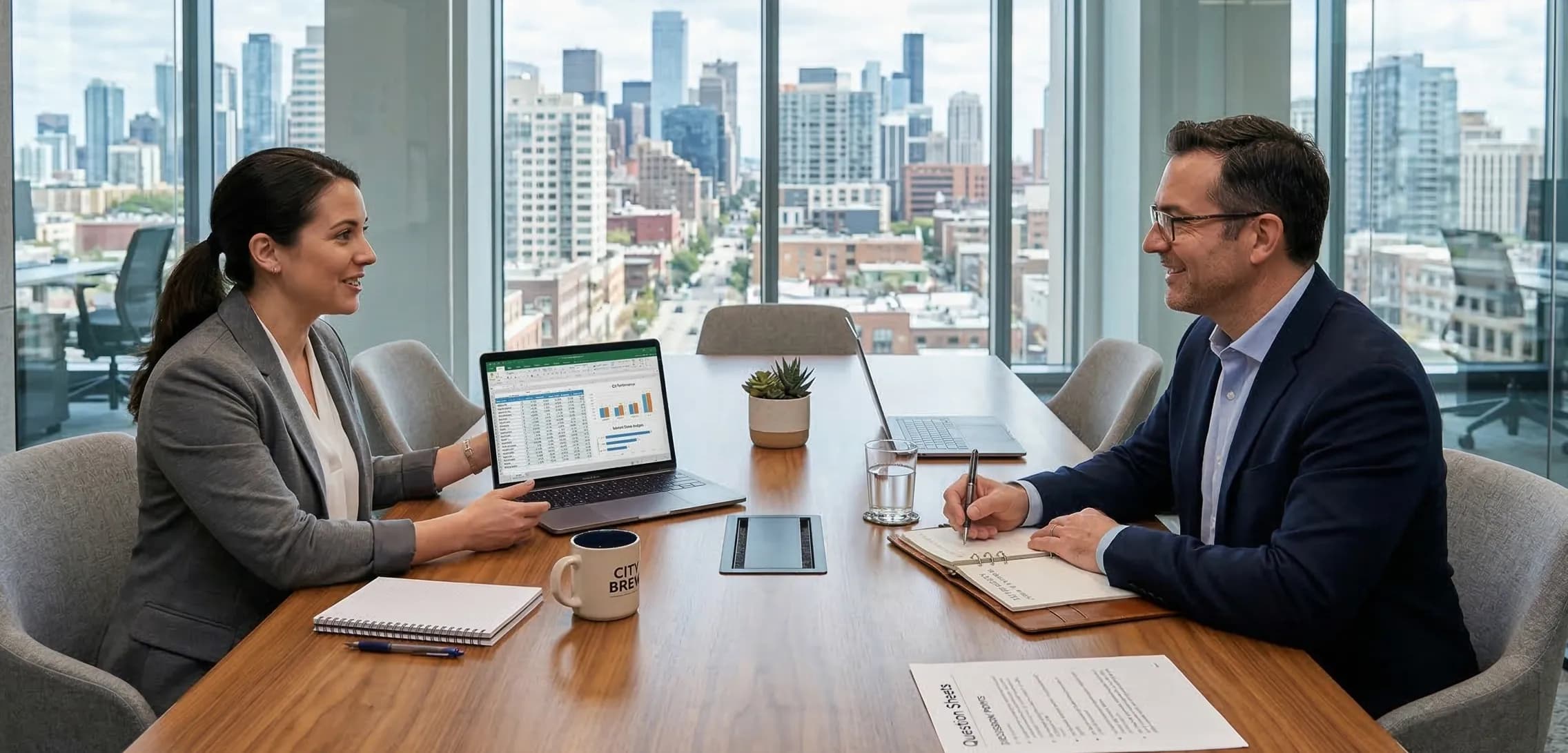
Hiring a product manager in 2026 is a different game. Every PM role now touches AI — whether it's shipping AI-powered features, collaborating with data scientists, or navigating model bias and compliance.
Generic product manager interview questions don't cut it anymore.
This guide gives you 45 targeted PM screening questions across nine categories — including practical "which tool do you use" questions that reveal how a candidate actually works day-to-day. These are designed for recruiters, hiring managers, and founders who need to evaluate product manager candidates quickly and consistently.
Use these questions verbatim during phone screens, async video interviews, or structured panel rounds.
Behavioral Questions
These assess past experience and soft skills.
- Tell me about yourself and your PM background. (tryexponent)
- Describe a product launch you led — what made it successful? (brainstation)
- Tell me about a time you handled a difficult stakeholder or conflict. (reddit)
- Give an example of a product failure and what you learned. (tryexponent)
- How have you used data to influence a key decision? (productschool)
What to listen for:
Candidates should give specific, structured answers (situation → action → result). Vague generalities or taking credit for team efforts without specifics are red flags.
Product Sense Questions
These evaluate vision and user focus.
- How do you define a product vision and align it with company strategy? (linkedin)
- Walk me through how you identify and validate a customer problem. (linkedin)
- What's a product you love, and how would you improve it? (tryexponent)
- How would you design an AI feature for [our product/domain]? (linkedin)
- How do you prioritize features in a roadmap? (finalroundai)
What to listen for:
Strong candidates articulate frameworks (RICE, ICE, impact vs. effort) and tie features back to user pain or business outcomes. Weak candidates list features without rationale.
Technical & AI Questions
These test 2026-relevant knowledge like AI integration, ethics, and metrics. (tryexponent)
- What key considerations apply when integrating AI/ML into a product? (pmaccelerator)
- How do you measure success for an AI-driven product post-launch? (finalroundai)
- Explain how you'd handle bias in an AI model. (joinleland)
- What metrics would you track for product health (e.g., North Star metric)? (linkedin)
- Describe your experience with A/B testing or experimentation. (pmaccelerator)
What to listen for:
Candidates should demonstrate awareness of data quality, model drift, ethical guardrails, and how ML uncertainty differs from traditional feature development.
Execution Questions
These probe practical skills for quick impact.
- How do you decide what to build versus what not to build? (linkedin)
- Tell me about a time you killed a feature — why? (linkedin)
- How do you collaborate with engineering and design teams? (reddit)
- What tools or KPIs do you use to assess product performance? (indeed)
- Why do you want to be a PM here, and what excites you about 2026 trends like AI? (youtube)
What to listen for:
The best answers show decisiveness backed by data, comfort with ambiguity, and an ability to say "no" with clear reasoning.
Tools & Process Questions
These reveal how a PM actually works day-to-day. Tool choices expose workflow maturity, cross-functional habits, and whether the candidate ships or just strategizes.
- What tool do you use for roadmap planning, and why?
- Which analytics platform do you rely on to track product metrics?
- What tool do you use to collect and organize customer feedback?
- How do you run and analyze A/B tests — what's your tool stack?
- What do you use for writing and sharing PRDs or product specs?
What to listen for:
You're testing for intentionality, not brand loyalty. Strong candidates explain why they chose a tool (e.g., "We used Amplitude because we needed funnel analysis across mobile and web") rather than just listing names. Red flag: a PM who can't name specific tools they've used recently.
Common answers you'll hear: Jira, Linear, or Productboard for roadmaps. Amplitude, Mixpanel, or Looker for analytics. Notion, Confluence, or Google Docs for specs. Optimizely, LaunchDarkly, or Statsig for experimentation.
Technical AI Knowledge
These probe deeper understanding of AI/ML fundamentals — essential for AI-first product manager roles. (igotanoffer)
- What is Retrieval Augmented Generation (RAG), and how does it work? (linkedin)
- Explain the difference between supervised and unsupervised learning. (joinleland)
- How do you handle bias in training data for AI models? (lockedinai)
- Describe supervised vs. unsupervised learning with product examples. (linkedin)
- What is a "Data Flywheel," and how do you design one for an AI product?
What to listen for:
You're not testing for data science depth. You want a PM who can have a productive conversation with their ML team and make informed tradeoff decisions. If they can explain RAG to a non-technical stakeholder, that's a great sign.
Product Sense & AI Strategy
These test how candidates think about integrating AI into real user problems.
- How would you design an AI feature to boost customer engagement by 30%? (igotanoffer)
- Where would you deploy AI in product discovery, and why is it better than non-AI? (igotanoffer)
- How do you prioritize AI initiatives on a roadmap? (joinleland)
- What's your favorite AI product, and how would you improve it? (igotanoffer)
- How do you manage user expectations when an AI feature is probabilistic (not 100% accurate)?
What to listen for:
Look for candidates who distinguish between "AI for the sake of AI" and genuine user value. The best PMs treat AI as a tool, not a feature.
Metrics & Evaluation
These assess how candidates measure AI success.
- How do you measure accuracy and success of an AI project? (linkedin)
- If an AI model underperforms post-launch, how do you triage? (igotanoffer)
- What metrics define success for a generative AI feature? (linkedin)
- How do you distinguish between product metrics (e.g., retention) and model metrics (e.g., F1 score)?
What to listen for:
Good candidates discuss precision/recall tradeoffs, user satisfaction alongside model accuracy, and have a framework for "when to ship" even with imperfect models.
Ethics & Risks
These evaluate responsible AI practices.
- What guardrails ensure AI avoids hallucinations or bias? (productschool)
- How do you ensure ethical AI, including privacy and compliance? (productschool)
- How do you handle the discrepancy between model training data and real-world production data?
What to listen for:
Candidates who treat ethics as a checklist item rather than an ongoing practice are a concern. Look for awareness of disparate impact, testing across demographics, and regulatory awareness (EU AI Act, etc.).
Execution & Collaboration
These gauge real-world AI delivery experience.
- How do you collaborate with data scientists on AI roadmaps? (lockedinai)
- Walk through launching an AI product from concept to production. (linkedin)
- How do you manage stakeholders when an AI project timeline is uncertain due to R&D risks?
What to listen for:
Strong candidates describe cross-functional cadences, how they handle model retraining cycles, and how they communicate uncertainty to stakeholders.
How to Use These Product Manager Interview Questions
- For phone screens: Pick 3–5 questions from different categories to get a broad signal in 20–30 minutes.
- For panel interviews: Assign one category per interviewer to avoid overlap and ensure full coverage.
- For async screening: Load these PM screening questions into a tool like ZScreen and let candidates answer on their own schedule — then review scored reports instead of scheduling dozens of calls.
Automate PM Screening With ZScreen
If you're screening more than a handful of product manager candidates, doing this manually doesn't scale.ZScreen turns any job description into a structured AI screening interview.
Candidates complete the interview asynchronously (voice, text, or written responses) and you receive a scored report with transcripts and a clear verdict. Instead of spending hours on phone screens, your team gets consistent, evidence-backed evaluations — automatically.
The Starter plan includes 25 screenings per month — free, no credit card required.
Frequently Asked Questions
How many product manager interview questions should I ask in a phone screen?
Aim for 3–5 questions from different categories. This gives you a broad signal across behavioral, product sense, and technical competence in a 20–30 minute call. Asking more than 7 questions in a phone screen usually means you're rushing through answers without depth.
What's the best way to screen product managers for AI knowledge?
Combine questions from the Technical AI Knowledge and Ethics & Risks sections. You're not looking for a data scientist — you want a PM who can have productive conversations with ML teams and make informed product tradeoff decisions involving AI capabilities and limitations.
Should I ask about tools in a PM interview?
Yes. Tool-focused questions ("Which analytics platform do you use?", "How do you manage your roadmap?") reveal workflow maturity and real-world experience. A PM who can't name specific tools they've used recently may be more of a strategizer than a doer.
Can I use these questions for async screening interviews?
Absolutely. All 45 questions are designed to work in both live and async formats. Tools like ZScreen let you load these into a structured interview that candidates complete on their own schedule, with AI-scored reports delivered to your inbox.
What's the difference between product sense and behavioral questions?
Behavioral questions assess past experience ("Tell me about a time...") while product sense questions test forward-thinking judgment ("How would you design..."). Both are essential — behavioral shows track record, product sense shows raw ability.
Sources
- Try Exponent — Top Product Manager Interview Questions
- BrainStation — Product Manager Interview Questions
- Product School — Ultimate List PM Interview Questions
- Final Round AI — AI Product Manager Interview Questions
- PM Accelerator — Top 20 OpenAI PM Interview Questions
- Join Leland — AI Product Manager Interview
- IGotAnOffer — AI Product Manager Interview
- LockedInAI — Technical PM Interview Questions for AI Roles
- Product School — AI Ethics in Product Management
- Indeed — Technical Product Manager Interview Questions
Share this cheat sheets
Ready to upgrade your screening?
Join thousands of modern hiring teams using ZScreen to hire faster and fairer.