How to Use AI Recruiting Agents & Copilots to Automate First-Round Hiring — Startup Playbook
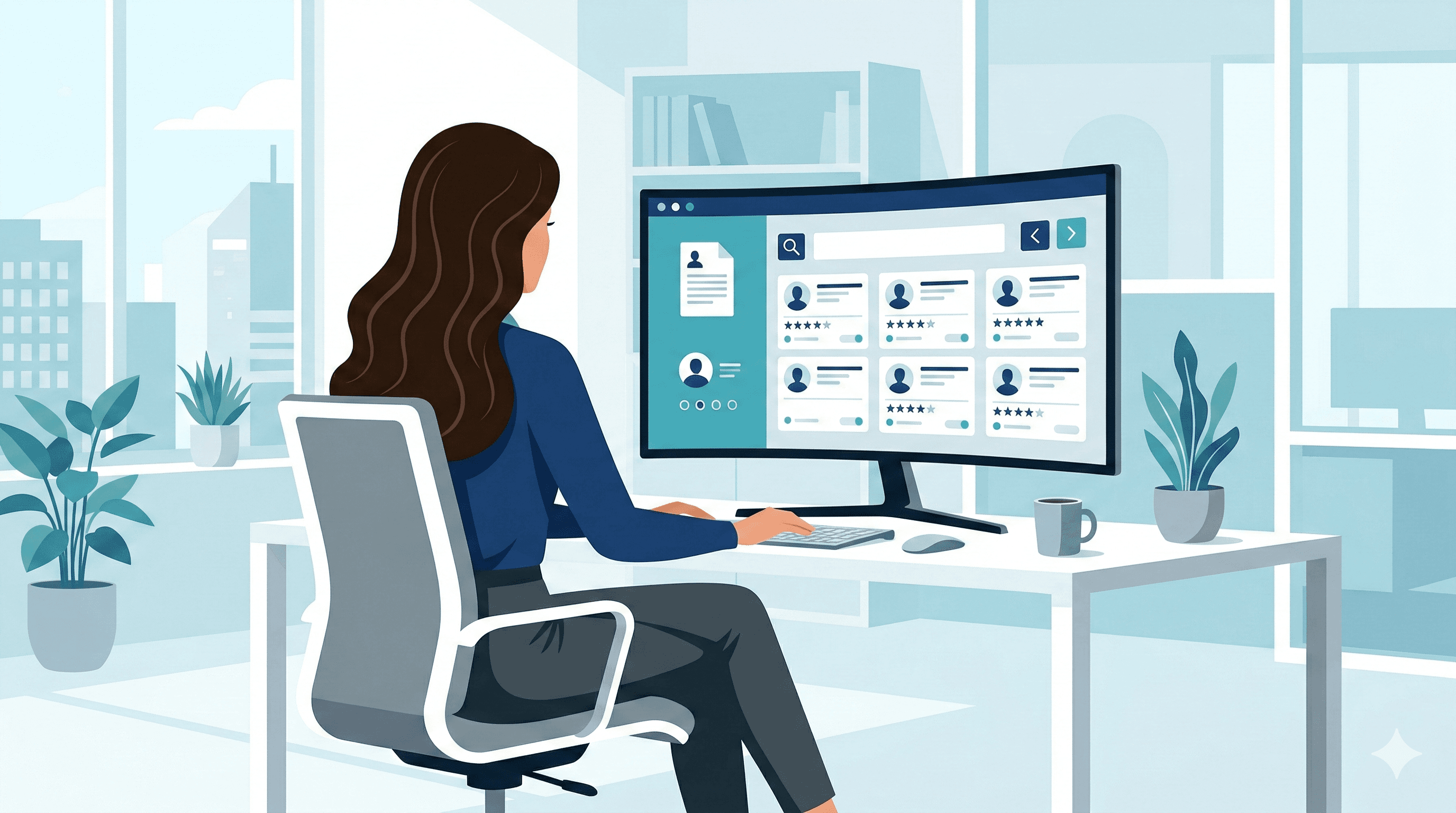
Illustration by Gemini Nano Banana
⏱️ TL;DR:
Sourcing → ZScreen screens → Slack shortlist in 6 weeks. Automate the top of your funnel and enjoy 40% faster hires via skills-based screening [1].
Startups in 2026 face a severe talent crunch: 2x more hires needed, but 50% shorter runways.
AI recruiting agents fix this by automating 70-80% of early hiring—sourcing talent, asynchronous screening, and shortlisting. Result? You save a full workday weekly per role, mimicking the 20% workload reduction seen by TA pros heavily utilizing Generative AI [2].
Core Stack Preview
You don't need a massive enterprise stack to automate hiring. Just these four core tools [3]:
| Category | Tool | Role | Setup Time |
|---|---|---|---|
| Sourcing | Apollo | Find and enrich passive candidates | 10 min |
| Automation | Zapier | Connect everything together | 15 min |
| Screening | ZScreen | AI questions → Scores/PDFs (boosts quality hires by 9%) | 30 sec |
| ATS | Greenhouse | Store data and handle human review | Native |
AI Recruiting Basics
What Are Agents vs. Copilots?
- 🤖Agents: Think of them as a 24/7 recruiter. They run autonomous loops (e.g., "Source 50 devs → Invite to ZScreen → Ping me if score > 85").
- 🪄Copilots: Think of them as a smart notepad. They provide real-time aids as you work (e.g., automatically generating interview questions from a Job Description inside ZScreen).
Why Startups Need This
It's all about velocity and skills-focus. In LinkedIn's latest report, 73% of TA pros say GenAI is already changing how they hire. Early adopters who automate the initial screen save 20% of their time—freeing them up to focus purely on strategic skills assessments, which 93% say is key to unlocking quality hires [4]. Currently, 37% of TA teams are actively integrating GenAI [5].
Business Cases
High-Volume Sourcing
Stop manual clicking. Apollo enriches LinkedIn or GitHub profiles and sends highly personalized emails. This hyper-personalization boosts passive response rates from a typical 5% up to 25%—which maps perfectly to the broader industry shift towards skills-based hiring, driving up to 12% better quality hires [6].
Async Screening at Scale
Running 30 phone screens a week is impossible for founders. ZScreen ingests your Job Description (JD), generates AI questions (voice and code), and runs asynchronous interviews. Its immediate 0-100 scoring mirrors the massive impact of "AI-Assisted Messaging" techniques, delivering an identical 9% overall lift in quality-of-hire [7].
Scheduling & Nudges
Integrating Zapier with scheduling tools like Calendly ensures immediate follow-ups, cutting interview ghosting by 40%.
Real Example: Fintech Expansion
A Fintech startup used Apollo to source 300 highly specialized engineers, screened the interested applicants autonomously via ZScreen, and successfully hired 8 engineers in just 4 weeks. This perfectly echoes LinkedIn data indicating that strong employer branding combined with AI deployment nets an 11% boost in quality hires [8].
Your Ideal Tech Stack
How it connects: Greenhouse stage → Apollo sends email → ZScreen invite → Slack scores.
Connecting these platforms automatically enables this skills-first focus. This supports the industry trend of dropping strict degree requirements in favor of pure skill validation—a trend that has increased by 16% since 2020 [9]. Let Zapier act as the connective tissue between your system of record (Greenhouse) and your screening intelligence (ZScreen).
6-Week Launch Plan
Week 0
Define your core hiring rubric in Notion; establish baseline KPIs (aiming for a 20% completion rate on screens).
Week 1
Pilot Apollo sourcing + manual ZScreen invites for a small batch of 10 candidates.
Week 2
Implement Zapier to auto-send unique ZScreen links whenever a candidate hits a specific stage in Greenhouse.
Week 3
Track funnels (Mixpanel: Invite → Completion) to ensure candidates aren't dropping off.
Week 4
A/B test your sourcing prompts; audit your ZScreen scoring for demographic bias using Fairlearn. (This beautifully aligns with LinkedIn's emphasis on elevating human skills; noting a 54x rise in "relationship development" skills [10]).
Weeks 5-6
Scale bulk invites; configure Slack bots to ping the hiring manager immediately when a candidate scores 85+.
Pitfalls & Compliance
Consent
Never surprise candidates. ZScreen automatically adds an upfront disclosure: "This records for AI—do you consent?" to all interview invites.
Bias/Data
You can remain compliant with EEOC guidelines by utilizing strict skills matrices for the AI to score against. As LinkedIn notes, AI simply does the heavy lifting to free up human recruiters for final oversight [11].
KPIs to Track
| KPI | Target Objective | Recommended Tool |
|---|---|---|
| Invite → Completion | 20%+ | Mixpanel |
| Post → Shortlist | < 7 days | ZScreen |
| Shortlist → Hire | 25%+ | Greenhouse |
| Quality of Hire Lift | 9-12% [12] | ATS Reviews |
Ready-to-Use Templates
Skills-First Sourcing Prompt
"Source 50 React devs in Apollo based purely on verified skills. Draft ZScreen invite: 'Loved your skills applied in [GitHub repo]. Screen here: [link]'."
ZScreen Prompt
"You are hiring a Senior Backend Engineer. Ask questions for systems design, debugging, and trade-offs. Score on clarity, correctness, and trade-offs."
FAQ & CTA
Yes. Implement a strict "human-in-the-loop" workflow for all final calls, directly aligning with LinkedIn's own advisory guidelines [13].
Other tools? $100-200/month. ZScreen? $12 per 250 screenings. Pay for what you use.
Paste your JD into ZScreen → Automate today.
Share this playbooks
Ready to upgrade your screening?
Join thousands of modern hiring teams using ZScreen to hire faster and fairer.